A business phone line that can answer common questions
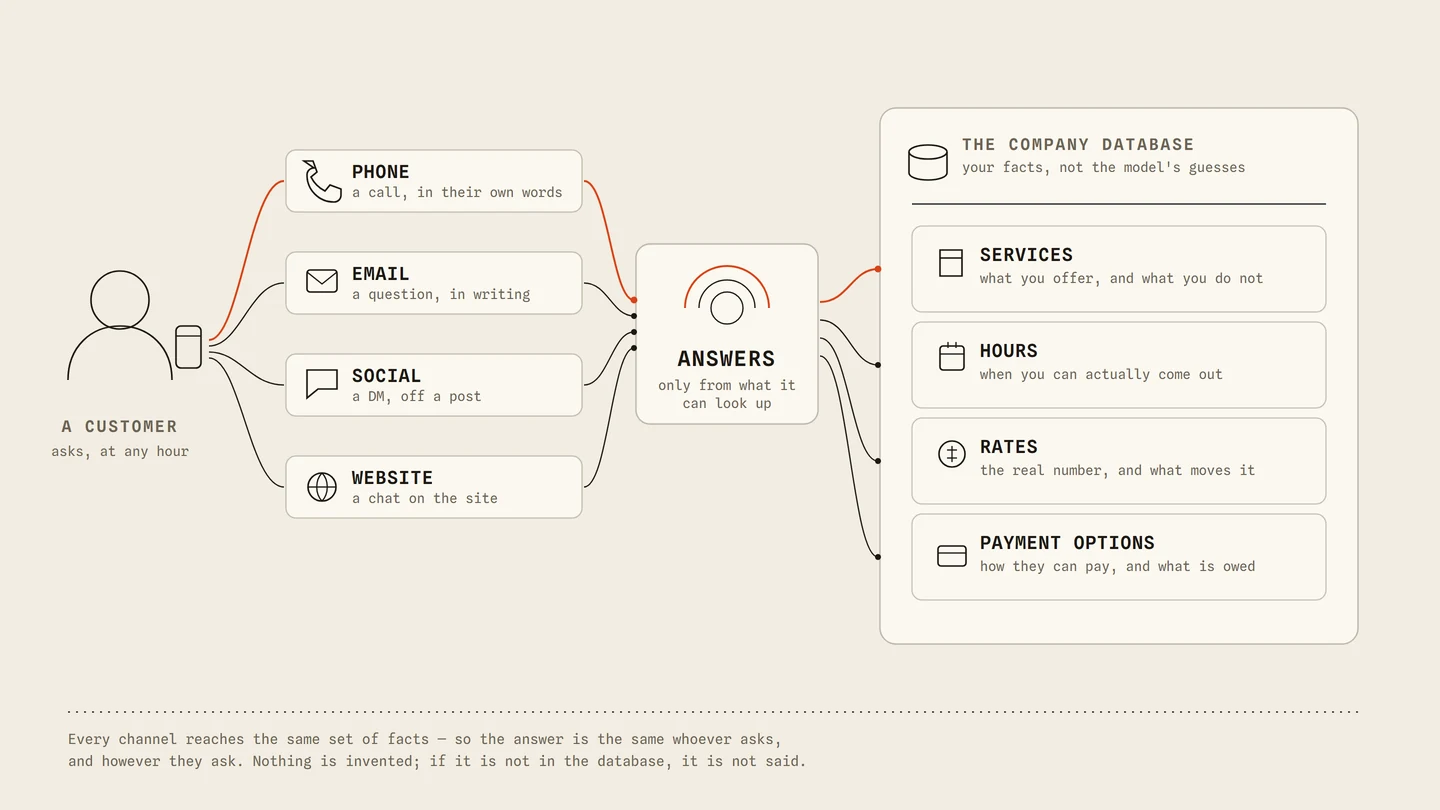
An AI receptionist answers the phone using the business’s own information. Callers can ask questions out loud, and the greeting and call options are set up for the business they called.
What the phone line needs to do
Someone calling a business wants a useful answer and a clear next step. A receptionist needs to know which business they called, what that business offers, and how its calls should be handled.
What happens on a call
- Hear the right greeting. The phone number selects that business's information and call settings.
- Ask a question naturally. The receptionist listens and speaks back using the information made available to it.
- Choose a call option. Where a menu is needed, the caller can speak or use the phone keypad.
- Use existing customer details. When customer matching is enabled, the receptionist can recognise a caller from the business's records.
A familiar question, a business-specific answer
A caller asking about services should get information from the business they called. Each business has its own customer records, greeting, and call rules, even when several businesses use the service. Callers are told they are speaking with an automated assistant.
Where it stands
A pilot is running on a live phone line, with further rollouts staged. Before another business goes live, its information and call flow need to be set up and checked. Booking, handoffs, and other connections depend on the agreed setup.
What a setup involves
The initial work covers the phone number, greeting, approved information, and call options. Ongoing costs cover keeping the line available and the information current, plus call usage. Longer calls and voice choices affect the running cost.
Have something like this in mind?
Tell Mark what you need people to be able to do. We can work out what to build, what it would cost, and what it will take to look after it.